

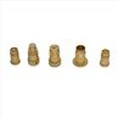
CNC 터닝 부품
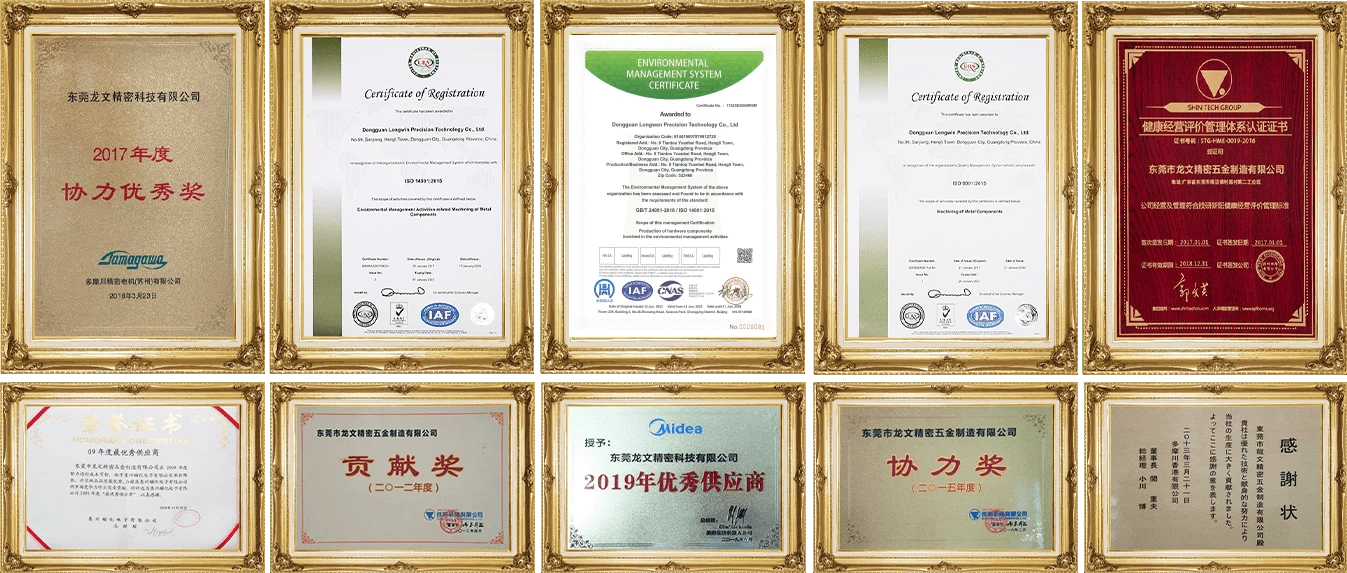
Our company was established in May 2006. It is a company focusing on R&D, industry, automation, automotive core manufacturing and sales components. Our current processing products cover automation FA, robots, servo motors, encoders, automobiles, medical, high-speed rail and other fields.
Our products have ISO9001:2008, CE certification, ISO/TS16949:2009 quality management system certification. Our products are 100% factory tested, well packaged, and provide you with free warranty service.
We use high-precision testing equipment to ensure high-quality products for all products. We have 30 kinds of testing and measuring instruments, including but not limited to gear testing center (TTI-Japan), 3D detector (ZEISS-Germany), optical scanner (VICI-Italy), cross sphere micrometer (MITUTOYO-Japan) , Altimeter measuring instrument (TESA-Switzerland)
As a company with 15 years of experience, we cooperate with world-renowned companies such as Siemens, Hitachi Anstemo, Honeywell, Mitsubishi, Yaskawa, Panasonic, ABB, KUKA, and Inovance.


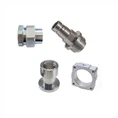
CNC turning parts refer to the manufacturing process of cutting material to shape using a computer-controlled lathe. The process involves placing a solid material, usually metal or plastic, on a rotating axis and using a cutting tool to remove material from the workpiece until it reaches the desired shape. CNC turning parts offer high precision, accuracy, and consistency, making them ideal for creating complex components with tight tolerances. These parts are commonly used in aerospace, automotive, medical, and industrial applications.


01
Aluminum is lightweight, strong and has excellent thermal and electrical conductivity, making it ideal for use in industries such as electronics, aerospace and automotive. It is also corrosion-resistant and easy to machine, making it a popular choice for CNC turned parts.
02
03
04
05

First, the part needs to be designed. This involves using CAD software to create a 3D model of the part. From this model, a program can be created that will be run on a CNC machine to produce the final part.


In CNC turning, the workpiece (usually a cylindrical or rod-shaped material) is fixed to a spindle and rotated. This rotation allows the cutting tool to remove material from the workpiece to obtain the desired shape and size.
CNC turning incorporates quality control measures to ensure the accuracy and precision of machined parts. This may involve in-process measurements using sensors or probes, as well as post-process inspection using measurement tools such as micrometers or coordinate measuring machines (CMM).
Multi-Axis Capability
Advanced CNC lathes often have multi-axis capabilities, allowing for simultaneous motion and machining operations. This enables the creation of complex geometries and reduces the need for multiple setups.
<. In order to make the best choice, it is crucial to consider the application and required performance of the part, as well as the specific capabilities of the CNC turning process.


Mainly check the power supply and air dryer. Under normal circumstances, the power supply voltage is rated at 180V-220V and the frequency is 50Hz. The air dryer should be disassembled, cleaned and reassembled once a month.